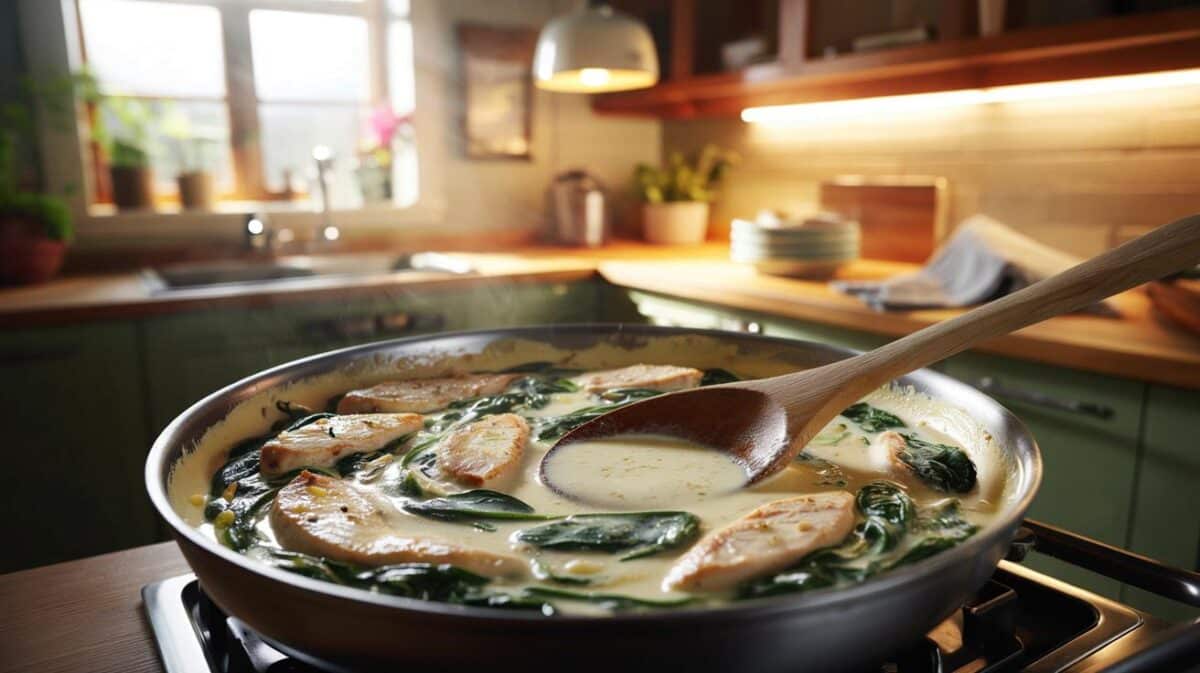
The other night, it was one of those cold evenings that seem to seep straight into your bones. The kind where your phone keeps lighting up with bad news and unanswered emails, and the couch is suddenly the most seductive place on earth. I stood in my tiny kitchen, half thinking about ordering something greasy on an app, half staring at the lonely vegetables in my fridge.
Then my eye caught a heavy pot on the shelf. I don’t know why, but I reached for it. I chopped an onion, the way my grandmother used to, let it hiss in butter, and something shifted in the room. The windows fogged up, the air warmed, and the smell of garlic and simmering stock turned my apartment into a different country.
By the time I sat down with that steaming bowl, the world outside felt quieter.
And I felt completely, almost surprisingly, satisfied.
The quiet power of a warm, simple meal
There’s a particular kind of hunger that has nothing to do with how many calories you’ve had that day. It’s the restlessness that crawls in after a long commute, harsh lighting, too many screens, and conversations that never quite go where you need them to. On nights like that, a salad won’t cut it and a protein bar is almost an insult.
What your body seems to be begging for is warmth. Something heavy enough to slow you down, but gentle enough that you don’t regret it later. Something that smells like home, even if you’re still figuring out what “home” means.
That evening in my kitchen, my comfort meal turned into a sort of ritual: chopped onion, crushed garlic, diced carrots, a potato, a handful of lentils I’d forgotten at the back of the cupboard. I browned everything gently, poured in stock, a splash of tomato, and let it murmur on low heat.
While it simmered, the tension in my shoulders started to unwind almost automatically. I set the table for one, without scrolling my phone. When I finally sat down, the first spoonful was almost startling. The lentils were soft but not mushy, the broth thick and velvety, the vegetables melting into the background. Nothing fancy, nothing Instagrammable, yet every taste landed exactly where I needed it.
There’s a basic human logic behind that feeling. Warm food signals safety to the body: you’re not in fight-or-flight, you have time to cook, you’re not running. Slow cooking releases aromas that start digestion before you even sit down, telling your nervous system that you can ease off the gas.
A bowl held in both hands forces you to pause. You lean over it, you breathe in the steam, you take smaller bites. Your brain finally gets the memo that the day is shifting gears. *That simple, steamy bowl does what no motivational quote on your timeline can do: it proves to your body that you’re cared for, right now.*
➡️ “I left fallen leaves on the soil” and moisture stayed longer without extra watering
➡️ “I’m a production systems assistant making $4,550 a month”
➡️ People who feel pressure to cope alone often internalize emotional responsibility
➡️ Most people misuse this basic kitchen tool without knowing it
➡️ The haircut that makes fine hair look thicker without layers or heavy styling
➡️ Most people overlook this everyday posture mistake
➡️ Psychology explains why emotional processing can feel slow but intense
➡️ I cooked this creamy meal and didn’t feel the need to add anything
How to build a comfort meal that actually satisfies you
There’s a trick to this kind of warm, satisfying meal: layers. Start with something that wants to sizzle—onions, leeks, or shallots—into a bit of butter or olive oil. Let them take their time; don’t rush this, it’s the moment when your whole home starts to smell like you did something good for yourself.
Then add what you have: carrots, celery, potatoes, sweet potatoes, or even the tired zucchini from the back of your fridge. Toss in a handful of lentils, chickpeas, or leftover shredded chicken. Cover with stock or water, a spoon of tomato paste, and let the pot do the heavy lifting.
Low heat. Slow bubbles. Lid slightly ajar. That’s it.
Most of us sabotage comfort meals without realizing it. We rush the cooking, eat standing up, or mindlessly scroll while the food disappears. We cook tiny, diet-style portions, then wonder why we’re rummaging through the cupboards an hour later.
Let’s be honest: nobody really does this every single day. But when you can, serve yourself a bowl that actually fills the plate. Add a generous slice of bread, maybe a little grated cheese, or a spoon of yogurt. Sit where you can rest your back. If your brain protests that this feels “too indulgent”, notice it, then feed yourself anyway. A comfort meal that leaves you hungry is just a well-seasoned frustration.
Sometimes the most nourishing thing you can do is stop counting, measuring, and optimizing, and simply let a good, warm meal take up space—on your plate and in your day.
- Choose your base: one onion, two cloves of garlic, and a little fat (butter or olive oil).
- Pick your “softeners”: carrots, potatoes, squash, or any root vegetables you like.
- Add your anchor: lentils, beans, rice, pasta, or leftover meat for staying power.
- Pour warmth:
- Stock, water with bouillon, or a mix of stock and tomato puree.
- Finish with comfort: herbs, a squeeze of lemon, a spoon of cream, or grated cheese on top.
What this kind of meal really changes in a day
Later that night, long after the dishes were stacked to dry, I noticed something small but surprising. I wasn’t prowling the kitchen. I wasn’t replaying awkward moments from the day on repeat. I went to bed a little heavier in the best sense of the word—grounded, settled, not chasing anything.
A warm comfort meal doesn’t magically solve your problems, but it does anchor the day in a different place. Instead of ending with a plastic container or a rushed snack, you close it with a quiet act of care. Your hands cooked, your senses participated, your body received.
| Key point | Detail | Value for the reader |
|---|---|---|
| Warmth over perfection | A simple, slowly cooked bowl beats a flawless “healthy” plate | Guilt-free comfort that still feels nourishing |
| Ritual, not just recipe | The chopping, simmering, and serving calm the nervous system | Built-in stress relief alongside the actual meal |
| Flexible formula | Base + vegetables + anchor + broth + finishing touch | Easy to adapt with whatever is already in your kitchen |
FAQ:
- Question 1What exactly did you cook that made you feel so satisfied?
- Answer 1A thick lentil and vegetable stew: onion and garlic in butter, carrots and potatoes, green lentils, vegetable stock, tomato paste, bay leaf, and thyme, simmered until creamy, then finished with grated cheese and black pepper on top.
- Question 2Can a comfort meal still be “healthy”?
- Answer 2Yes, if you build it around real ingredients: vegetables, a protein source (lentils, beans, eggs, chicken), and a bit of fat for flavor. Health in this context also means feeling calm and full, not just counting nutrients.
- Question 3What if I don’t like lentils or stews?
- Answer 3The same comfort logic works with creamy polenta, baked pasta, a rice bowl with sautéed vegetables, or even eggs on toast with warm tomatoes. The key is heat, softness, and a mix of carbs, protein, and fat.
- Question 4How long does this kind of meal take to cook?
- Answer 4Most simple comfort pots take 30–45 minutes, but only about 10–15 minutes of actual effort. The rest is just simmering while you unwind, shower, or put on softer clothes.
- Question 5What if I live alone and don’t feel like cooking for one?
- Answer 5Cook once, eat twice (or three times). Make a small pot, eat a comforting bowl tonight, then pack the rest for lunch or freeze portions. Think of it less as “cooking for one” and more as taking quiet care of your future self.