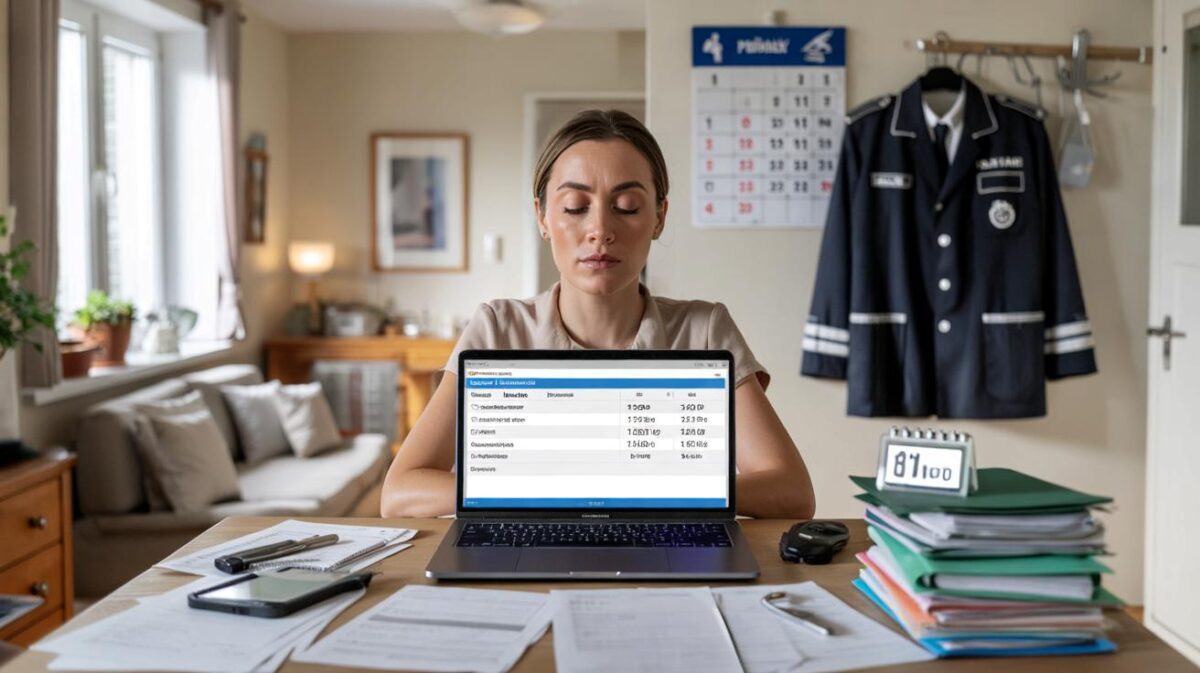
At 5:42 a.m., the plant is half-asleep and humming. The fluorescent lights flicker on one by one, the coffee in the break room tastes vaguely like cardboard, and somewhere a conveyor belt screeches because someone forgot to grease it Friday night. That “someone” will be my problem in about three minutes.
I clock in, tie my steel-toe shoes a little tighter, and open the production dashboard. Ten lines, three alarms, one email from finance asking why overtime exploded last week. My job title sounds obscure on LinkedIn: production systems assistant. In reality, I’m the person between the machines, the data, and the people trying to hit targets without burning out.
I make $4,550 a month for this strange mix of spreadsheets, oil stains, and diplomacy.
Some days, it feels like I’m the thin line between chaos and a late shipment.
What a production systems assistant really does for $4,550 a month
On paper, my job is about “optimizing production flows” and “supporting systems reliability.” In real life, it’s translating what the machines are doing into something humans can understand before the boss starts pacing. My day starts with a simple question: where are we losing time and money right now.
I live inside dashboards, maintenance tickets, and walkie-talkie chatter. One minute I’m checking cycle times, the next I’m on the floor asking an operator why Line 3 is suddenly crawling. There’s always a reason: a sensor acting weird, a new person still learning, a supplier sending a slightly off batch.
The salary sounds comfortable. The mental tab of everything whirring at once is the real cost.
Last month, we had a moment that sums up this job. It was a Thursday afternoon, end of the month, when everyone’s extra tense. Our biggest line froze in the middle of a rush order. I watched the OEE graph on my screen nose-dive in real time.
I ran to the line and found three people staring at a silent machine like it might explain itself. A tiny plastic stopper had broken, stopping the whole system. Maintenance was tied up on another emergency. So I pulled the last maintenance log, checked the last minor stops, saw the same error popping up all week. We’d all ignored it because production was “good enough.”
That ten-cent part held up a six-figure contract for almost an hour. The next morning, my manager asked me how early we could have seen it coming. I hated that I knew the answer.
➡️ “I’m over 60 and my mornings felt rushed”: the cortisol peak I misunderstood
➡️ Most people overlook this everyday posture mistake
➡️ I cooked this creamy meal and didn’t feel the need to add anything
➡️ Workers in this field are in such high demand that salaries keep rising every year
➡️ “I managed to save $5,000 in 12 months without earning a single extra dollar”
➡️ How to manage money realistically when prices keep rising
➡️ The haircut that makes fine hair look thicker without layers or heavy styling
➡️ I cooked this warm comfort meal and felt completely satisfied
This job pays $4,550 a month because I’m not just “fixing problems.” I’m supposed to catch them before they explode. That means learning to read little signals: a slightly longer setup time, a complaint in the locker room, a spike in scrap that looks tiny on a chart but huge on the floor.
The weird part is how invisible it all is. When production runs smoothly, people assume the system just works. When it doesn’t, everyone suddenly remembers you exist. You end up carrying this quiet pressure: if the line stops, the bonus, the delivery, the client, everything starts wobbling.
*The money is decent, but you also get paid in responsibility you can’t really explain at family dinners.*
How I stretch $4,550 a month without losing my mind
The first time that salary hit my account, I felt rich. Then rent, transit, food, loans, and the “I’m too tired to cook” takeout hit back. So I had to build a system for my money the same way I track a production line.
I split my month into three “mini-cycles.” Days 1–10 are fixed bills: rent, insurance, transport pass. Days 11–20 are food, small pleasures, coffee with friends. Days 21–30 are savings and the “oh no, my car sounds weird” fund. I don’t use seven apps or color-coded journals. Just two bank accounts and one rule: my main card never sees more than my free-to-spend amount.
Let’s be honest: nobody really does this every single day. I review once a week, Sunday night, with a cheap pizza and a half-open laptop.
The biggest trap with this kind of steady salary is lifestyle creep. You think, “It’s fine, I’ll just grab Uber instead of the bus, I worked hard this week.” Then suddenly you’ve signed for a more expensive apartment because “I’ll get a raise anyway.” We’ve all been there, that moment when your bank app loads and you’re scared to look.
I learned the hard way when I took on a car payment right before a surprise dental bill. The car felt great for three months, then became a monthly reminder that I’d planned my life as if nothing bad ever happens. Now, before any big recurring expense, I play out the “what if” script: what if overtime gets cut, what if I’m between jobs for three months, what if rent jumps.
It sounds gloomy, but thinking like that actually gives me more breathing room. Saying no to one shiny thing often means less panic later.
There’s one simple mindset that saved me more money than any “hack.”
“My salary is not my worth. It’s just the current price of my time, energy, and skills in this one place, right now.”
When I see it that way, I stop trying to “earn” every expense with suffering, or spending to feel like I’ve “made it.”
- Non-negotiables: Rent, basic food, transport, emergency buffer get paid first, no discussion.
- “Sanity money” envelope: small fun budget I’m allowed to use without guilt or spreadsheets.
- Job-protection costs: decent shoes, decent sleep, decent lunches so I don’t burn out and lose the job that pays everything else.
- Growth pot: cheap courses, books, or tools that might help me move up from assistant to something more.
The goal isn’t to be perfect. It’s to feel a little less like you’re sprinting on a conveyor belt every month.
Living between machines, people, and future plans
When I tell people I’m a production systems assistant, most imagine someone in a dark room staring at charts. The truth is messier and strangely human. I spend half my time with data, half with people who are tired, proud, frustrated, or just trying to get through their shift and go home.
Some days, the job feels like babysitting a giant nervous system made of metal and humans. One broken sensor, one sick operator, one late delivery, and the whole rhythm changes. On those days, my $4,550 feels both too much and not enough. Too much for how random it all seems. Not enough for the mental load of knowing where all the cracks could appear.
I think a lot about the next step. Do I want to move into industrial engineering, planning, or management. Do I really want more money if it means less time walking the lines and more time in meetings. The job has this strange side effect: you start seeing your own life like a system as well. Where are you wasting energy. Where are you repeating the same tiny mistake that costs you a lot later.
There’s a quiet pride in knowing how a factory breathes, where the bottlenecks hide, how a shift leader’s mood can change the output of an entire day. It makes you realize that behind every product on a shelf, there’s a bunch of people juggling alarms, numbers, and half-drunk coffee.
If you’re reading this wondering whether a role like this is “worth it,” the real question might be: what kind of pressure are you willing to live with, and what kind of progress do you want in return. The salary is one part. The skills are another: problem-solving on the fly, reading people, seeing patterns in chaos. Those don’t show up on your paycheck, but they quietly stack up in your favor.
Some evenings, leaving the plant when it’s finally quiet, I stand in the parking lot and listen to the last machines winding down. I think about how fragile everything is, and how strangely satisfying it can be to keep it all running one more day.
Maybe that’s the real paycheck: knowing that in a world built on invisible systems, you actually understand at least one of them from the inside.
| Key point | Detail | Value for the reader |
|---|---|---|
| What the job really is | Bridge between data, machines, and people on the shop floor | Helps you see if this role fits your personality and energy |
| Managing $4,550/month | Three “mini-cycles” for bills, living, savings and emergencies | Concrete way to bring structure without complex budgeting |
| Invisible skills | Pattern recognition, calm under pressure, financial realism | Shows how this job can be a launchpad for better roles later |
FAQ:
- Question 1How many hours do you work to earn $4,550 a month as a production systems assistant?
Most months, I’m around 40–45 hours a week, but it swings. When a big project or breakdown hits, I’ll stay late or come in early. Overtime is part of the culture in many plants, even if nobody writes that in the job ad.- Question 2Do you need a specific degree to get this kind of job?
Where I work, having a technical or engineering-related degree helped me get in the door, but strong experience in production, logistics, or maintenance can open the same role. Companies care a lot about whether you understand how a line really runs, not just what a textbook says.- Question 3Is $4,550 a month enough to live comfortably?
It depends on where you live, your rent, and your debts. For me, it’s “comfortable with planning.” Without some structure, it disappears fast into housing, transport, food, and random emergencies. With a simple system, I can save a bit and still have a life.- Question 4What’s the most stressful part of the job?
When multiple lines have issues at the same time and everyone wants an answer right now. You’re juggling operators, managers, and numbers on a screen that won’t stop dropping. Staying calm when you don’t yet know what’s wrong is the real test.- Question 5Can this role lead to better-paying positions?
Yes. It’s a solid launch pad for production planner, continuous improvement specialist, industrial engineer, or even plant manager roles in the long run. The mix of technical exposure and people skills makes you visible if you’re willing to keep learning and ask for more responsibility.