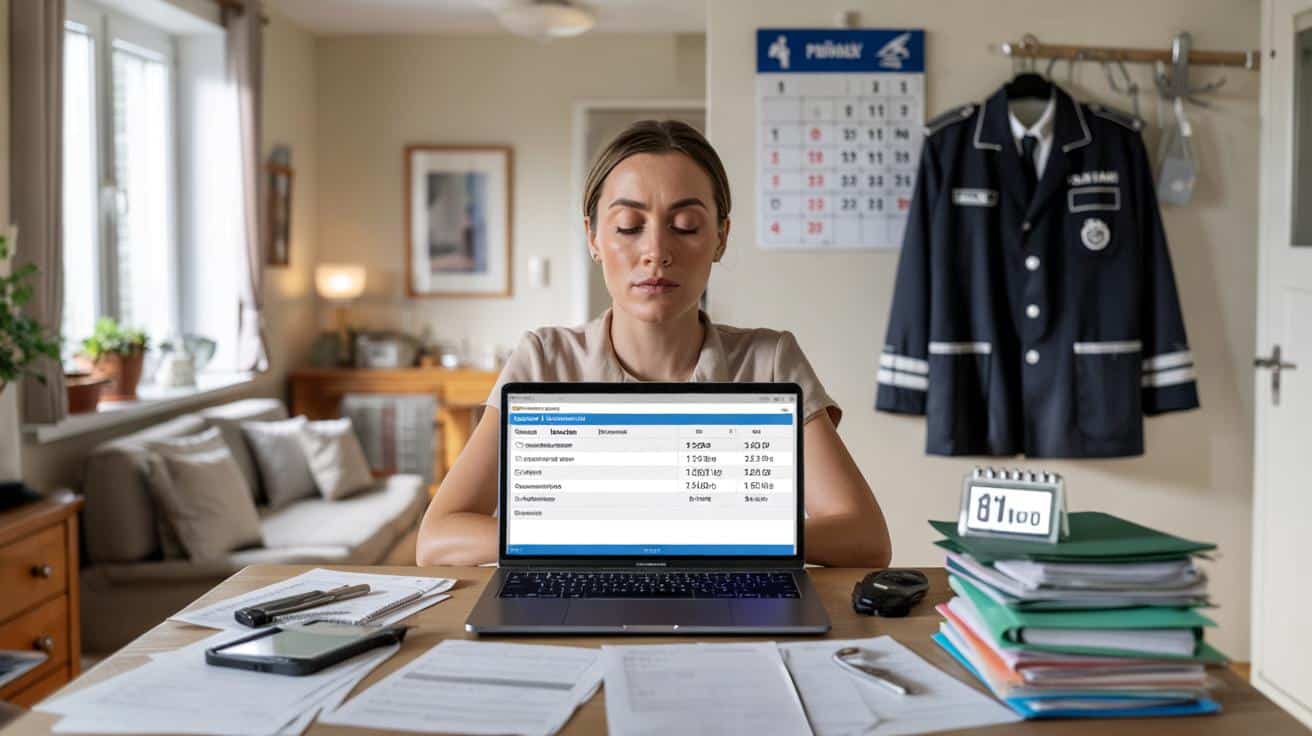
The call came at 6:47 p.m., right when the supermarket was starting to fill up. A friend, voice flat, staring at her online banking app in the parking lot. Her salary hadn’t moved in three years. Rent had. Groceries had. Everything had, except that lonely number next to “net income”.
She said what so many quietly think: “What’s the point of working if my pay never grows?”
Yet a week later we were talking about a neighbour of hers, same city, same prices, who never panics on the 28th. No yearly raise, no fancy promotions. Still, her income lands with the same reassuring weight every month, like a train that never misses the station.
Same country. Same economy. Completely different feeling.
Something else is at work here.
A role where “boring” is a financial superpower
You know the colleague who never seems stressed on payday? The one who doesn’t chase promotions on LinkedIn, doesn’t brag about bonuses, yet somehow always looks… stable.
Very often, that person has one thing you don’t see in the job title: **predictable pay mechanics**. Not huge. Just firmly anchored. Split between base salary, guaranteed allowances, and maybe a union-negotiated grid that barely moves but never breaks.
It doesn’t look sexy on a CV. It looks like “administrative assistant in a public hospital”, “railway operator”, “tenured school librarian”, “municipal clerk”. Roles everyone ignores at 20 and secretly studies at 35.
Jobs that feel almost slow-motion. Until you look at the bank account over ten years.
Take Malik, 42, who works as a train dispatcher. No annual bonus, no turbo-charged commission, no sudden jackpot. His last official raise was a tiny adjustment two years ago.
➡️ The haircut that makes fine hair look thicker without layers or heavy styling
➡️ Most people overlook this everyday posture mistake
➡️ How to manage money realistically when prices keep rising
➡️ “This creamy dinner is what I cook when I don’t want leftovers hanging around”
➡️ People who feel pressure to cope alone often internalize emotional responsibility
➡️ I cooked this warm comfort meal and felt completely satisfied
➡️ “I left fallen leaves on the soil” and moisture stayed longer without extra watering
➡️ Psychology explains why emotional processing can feel slow but intense
On paper, not a dream.
Yet his income never dips. Night shifts, Sunday rotations, and seniority allowances are locked into a collective agreement. The numbers don’t explode, yet they also don’t fall off a cliff when the economy coughs.
He bought a small apartment at 33. By 40, he finished paying off his student loan. While friends in “dynamic” sectors saw salaries jump then freeze or even drop, his monthly net stayed weirdly calm.
Not rich. But never bracing for impact.
The quiet secret of these roles is structural. They are designed less for “performance” and more for continuity. Public or semi-public employers, strong unions, statutory contracts, long-term budgets rather than quarterly targets.
That translates into a pay rhythm that’s almost dull. Dull is underrated.
Your salary can stay flat on paper and still feel stable because everything around it isn’t constantly under threat: hours, contract type, benefits, job security. *Stability of the frame often counts more than the movement of the number itself.*
Let’s be honest: nobody really does this every single day, but when you run the math over a decade, a slow, guaranteed income often beats a flashy, fragile one.
One role won’t save you from inflation on its own. The wrong role can expose you to every gust of wind.
How to turn a “no-raise” job into real stability
If you’re drawn to this kind of role, think like a strategist, not a victim of HR. The first step is to read the fine print of the contract as if it were a second salary.
Ask for details on allowances, fixed premiums, seniority bonuses, and automatic steps that don’t depend on your manager liking you. Many hospital workers, civil servants, and transport employees underestimate how much guaranteed extras quietly lift their base pay.
Look at working hours, overtime rules, and schedule predictability. A stable income is not just about “how much”, it’s about “when” and “for how long”.
The role that offers true stability is often the one where the worst-case scenario is already written and limited.
There’s a subtle trap though. When your income feels secure, you can slide into autopilot. No promotion, no raise, same habits. The money comes in, the subscriptions multiply, and you wake up one day thinking, “I’m stable on paper, why am I always broke?”
The mistake isn’t the job. It’s treating stability like a sedative instead of a tool.
Use the calm to negotiate everything around the salary: rental conditions, debt refinancing, energy contracts, commuting costs. People in more volatile sectors don’t even have the mental space to do this.
Be gentle with yourself if you’ve been drifting. We’ve all been there, that moment when the comfort of routine quietly turns into financial fog.
The most powerful thing about a stable income is not the number itself, but the decisions you dare to make because you trust that number to show up next month.
- Map your pay structureList base salary, allowances, fixed premiums, and benefits you’d need to replace with cash if they disappeared.
- Anchor your essentialsFix rent or mortgage at a level you can carry for years without stress, not just “this year if nothing goes wrong”.
- Automate resilienceSet a modest, automatic transfer each month to savings or debt payment, aligned with your most predictable payday.
- Protect your timeUse the more regular schedule to upgrade skills that keep you employable inside and outside your current institution.
- Say no strategicallyTurn down extra shifts or side gigs that pay well but wreck your health or energy every single week.
A role is stable when your life can breathe around it
When you strip away the buzzwords, the role that offers stable income without raises or promotions is usually one thing: a job where your worst financial month looks a lot like your average one.
That kind of predictability gives you something priceless: mental space. Space to plan a move, a baby, a side project, or just a quiet winter without panic.
You might already be in such a role and not recognise its value because it doesn’t glitter on social media. Or you might be chasing growth in a job that pays more today but keeps your future on a knife edge.
The real question becomes personal: what feels richer to you over ten years? A salary that sometimes flies and sometimes crashes, or an income that walks at the same speed, every month, while the rest of your life picks up the pace around it?
Your answer might change what “good job” means from now on.
| Key point | Detail | Value for the reader |
|---|---|---|
| Predictable pay structure | Base salary + guaranteed allowances and benefits locked by contract or grid | Helps you see the true, long-term value of a “flat” paycheck |
| Controlled worst-case scenario | Income and schedule don’t swing wildly with performance or market shocks | Reduces anxiety and supports long-term decisions like housing or family |
| Using calm as a tool | Leverage job stability to optimise expenses, build savings, and grow skills | Transforms a modest, static salary into genuine financial security |
FAQ:
- Question 1What kind of roles usually offer this stable income without big raises?
- Answer 1Typically public sector and quasi-public roles: administrative staff in schools or hospitals, municipal and government employees, rail and public transport workers, some utility companies, and tenured teaching positions. They often rely on fixed pay grids and collective agreements rather than individual negotiations.
- Question 2Can I really build a solid financial future if my salary barely moves?
- Answer 2Yes, if your income is predictable and your fixed costs are kept under control. Many people in “flat” salary jobs manage to buy property, clear debts, and build savings slowly because their worst month is still manageable and they can plan for the long term.
- Question 3How do I know if my current job is truly stable or just underpaid?
- Answer 3Look at contract type, risk of layoffs, pay variability, and benefits. If your hours or income can drop suddenly, or if your position depends heavily on short-term targets, you’re exposed. A stable role is one where rules are written, predictable, and rarely broken.
- Question 4Should I leave a high-paying but unstable job for a lower, stable one?
- Answer 4That depends on your priorities and responsibilities. If financial anxiety, irregular income, or constant job insecurity are draining you, a lower but steadier salary can be a better tradeoff, especially once you account for mental health, family life, and long-term planning.
- Question 5What if my stable job feels like a dead end?
- Answer 5Use the predictable schedule and income as a launchpad, not a prison. You can train, start a side project, or gradually pivot to another field while still enjoying the safety net of your current role. Stability buys you time to design the next step without rushing into bad decisions.