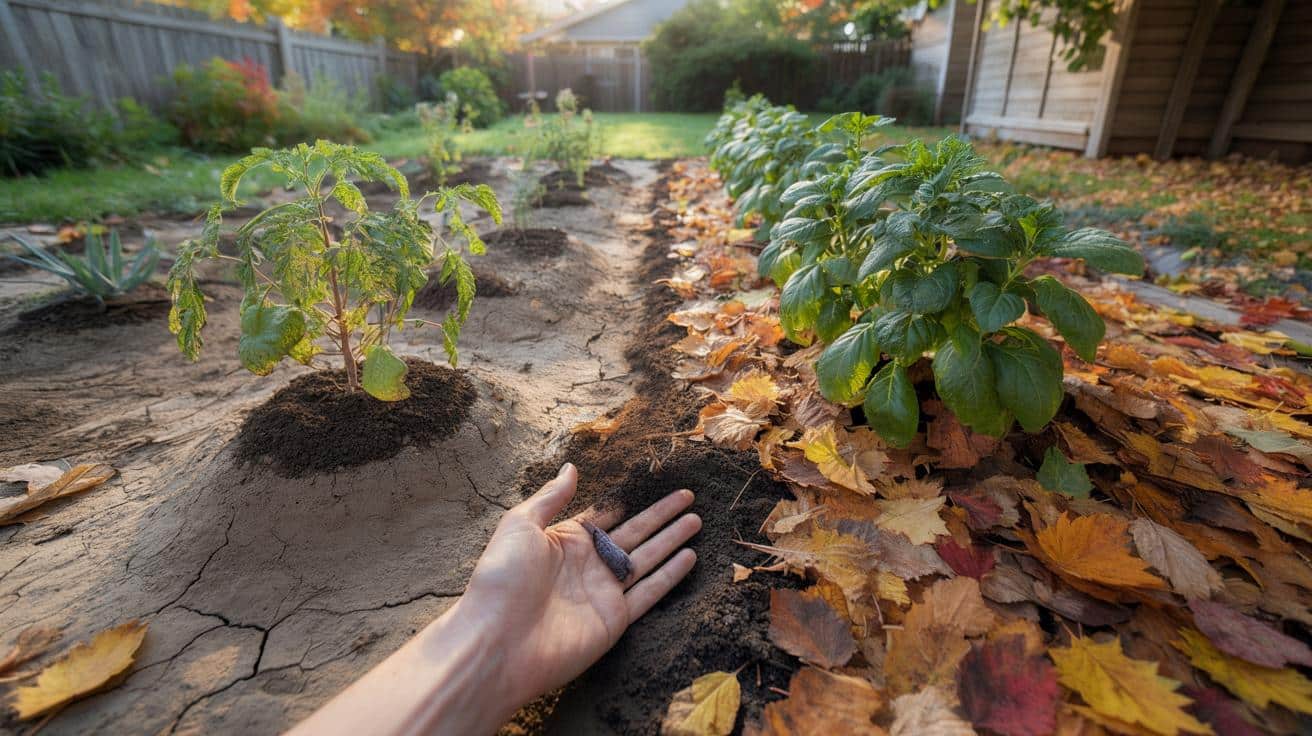
The first time I decided not to rake, the yard looked like it was wearing someone else’s coat. A messy one. Leaves piled in corners, drifted between the vegetable rows, stuck against the fence. I kept thinking the neighbors would judge me, that someone would slip a polite flyer about “community aesthetics” into my mailbox.
Then something strange happened.
A week passed. Two. The watering can, which usually lives in my hand by late fall, started gathering dust. The soil under the leaf layer stayed dark and cool, even after a stubborn, windy day. I knelt down, pushed aside a few oak leaves, and felt it with my fingers. Moist, almost like after a good overnight rain.
That’s the moment I realized: my “mess” was quietly doing the work for me.
What really happens when you leave leaves on the soil
The change snuck up on me. I had a bed of herbs along the fence that usually dries out first, a kind of thirsty warning system that tells me when everything needs water. By late season, their soil is normally so dusty it looks sunburned. This time, the top was hidden under a soft, patchy quilt of maple and cherry leaves.
I brushed them aside expecting the usual cracked crust. Instead, my fingers sunk into cool earth. It felt like early morning after a night of soft drizzle, even though it hadn’t rained for six days. The thyme and oregano looked surprisingly relaxed, leaves thick and almost smug, like they knew a secret I didn’t.
That small herb bed turned into my personal experiment. On the right, I left the leaves as they fell, just moving them away from stems so nothing got smothered. On the left, I raked everything clean like a gardening magazine cover. Same sun exposure, same plants, same watering schedule.
After ten days with no extra water, the bare soil was pale and crumbly, already pulling away from the edges of the bed. On the “messy” side, I could still form a ball of damp earth in my palm. The plants told the same story: the leafy side stayed greener, perkier, less stressed. No spreadsheet needed, the difference was almost embarrassing.
There’s a simple logic behind this quiet miracle. The leaf layer acts like a blanket, limiting evaporation, softening the impact of sun and wind that usually strip moisture away. Under that layer, micro-life gets busy: fungi, worms, all the quiet workers that keep soil spongy and alive.
Bare soil loses water fast, like skin without lotion on a dry winter day. Covered soil holds it longer. The leaves trap pockets of humid air close to the ground, slow the runoff when it does rain, and slide slowly into compost. *It’s like giving your garden a low-tech, zero-energy hydration system that runs on time and gravity.*
➡️ “This creamy dinner is what I cook when I don’t want leftovers hanging around”
➡️ I cooked this creamy meal and didn’t feel the need to add anything
➡️ Psychology explains why emotional processing can feel slow but intense
➡️ Workers in this field are in such high demand that salaries keep rising every year
➡️ I cooked this warm comfort meal and felt completely satisfied
➡️ The haircut that makes fine hair look thicker without layers or heavy styling
➡️ How to manage money realistically when prices keep rising
➡️ People who feel pressure to cope alone often internalize emotional responsibility
How to leave leaves on the ground… without creating a soggy mess
The trick isn’t just “leave everything and walk away”. It’s more about arranging the leaves than removing them. I now treat them the way you might treat a blanket on a bed: spread, adjust, lighten in some spots, double up in others.
Over the vegetable beds, I aim for a loose layer about one to two inches thick. I keep a small gap around the base of each plant so stems can breathe. On pathways, I go a bit thicker, then walk on it so it compresses into a soft carpet that keeps mud under control. The goal is to see leaves, but not bury your garden under them.
The biggest fear people share with me is, “Won’t my plants rot under all that?” That can happen if you pile leaves in wet clumps like a forgotten laundry basket. Wet mats of leaves block air and can trap too much moisture against tender stems.
So I learned to fluff them. If a spot looks compacted, I gently shake and spread the pile with my hands or a rake. If your trees drop big leathery leaves, like magnolia, shredding them with a mower first helps a lot. And let’s be honest: nobody really does this every single day. I touch up the worst areas when I walk by, and leave the rest to balance out naturally.
The line that changed my mind came from an old gardener in my town: “You don’t have a leaf problem,” he told me. “You have free mulch, and you’re throwing it away.”
- Keep leaves loose, not packed
Aim for a light, fluffy layer that you can still push your fingers through. This lets water seep in and soil breathe. - Redirect, don’t remove
If an area has too many leaves, slide the extras to paths, tree circles, or around shrubs instead of bagging them. - Watch for slugs and pests
In very wet climates, pull leaves back a bit from young seedlings so they’re not living in a permanent damp hug. - Mix with other browns and greens
A few grass clippings or a bit of compost sprinkled over the leaves speeds up their breakdown without losing the moisture benefit. - Test your own “before/after”
Leave one area bare and one covered. Your eyes – and your watering can – will feel the difference fast.
Rethinking “tidy” gardens and thirsty soil
Once you see what a simple layer of leaves does to soil, it’s hard to unsee it. You start noticing where the ground cracks first, where weeds rush in, where the hose always seems to end up. You start asking different questions. Not “How do I clean this up?” but “What if I just worked with what’s already falling?”
We’ve all been there, that moment when you look at the season’s first big leaf fall and feel tired before you even pick up the rake. There’s a quiet relief in realizing you don’t have to fight it so hard. One small change in habit – leaving more of those leaves on the soil – turns into fewer trips with the watering can, richer earth, less guilt about the brown lawn next door.
Maybe that’s the real shift happening in our yards. Not just saving water or time, but letting go of the idea that a “good” garden is always bare, combed, controlled. Sometimes the most alive soil is the one that looks a little wild from the sidewalk.
| Key point | Detail | Value for the reader |
|---|---|---|
| Leaves act as natural mulch | They reduce evaporation, protect soil from sun and wind, and keep it cooler | Less watering needed and plants stay hydrated longer |
| “Messy” areas can be strategic | Target beds, tree bases, and paths instead of clearing everything | Save time and energy while improving soil health where it matters most |
| Simple adjustments avoid problems | Use thin layers, avoid smothering stems, fluff compacted spots | Enjoy moisture benefits without rot, pests, or suffocated plants |
FAQ:
- Should I leave all fallen leaves on my lawn?Leaving a light layer is fine, but a thick, unbroken carpet can smother grass. You can mow over leaves to shred them and let the pieces feed the lawn, then move the rest to beds or under trees.
- Will leaves attract slugs or unwanted insects?They can offer shelter to some pests, especially in very damp climates. Keep leaves a little away from tender seedlings and check under the layer now and then. Healthy, living soil usually balances this out.
- How thick should the leaf layer be?For most beds, 1–2 inches of loose leaves works well. Around shrubs and trees, you can go a bit thicker, as long as it’s not packed tightly like a wet sponge.
- Do I still need to water if I leave leaves on the soil?You’ll likely water less, not never. The leaf layer stretches the time between waterings by slowing evaporation and helping the soil hold on to moisture longer.
- What about diseases from tree leaves?If your tree had a serious fungal disease, you might prefer to compost those leaves separately or move them away from the most sensitive plants. For most healthy trees, fallen leaves are simply future soil.